Chimney Repair in Sandy Springs, GA, From the Crown Down
Most chimney leaks in Sandy Springs never start in the chimney. They start at the joint where brick meets shingle, in flashing that gave up years before the masonry around it. The rest start higher, at cracked crowns, rusted chase covers, and mortar joints that six decades of Georgia rain have hollowed out. Chimney repair here means working both trades at once, roofing and masonry, on housing stock built between the 1960s and the 80s. The inspection that sorts out which problem you actually have is free, and the findings come back to you in photos, not a sales pitch.
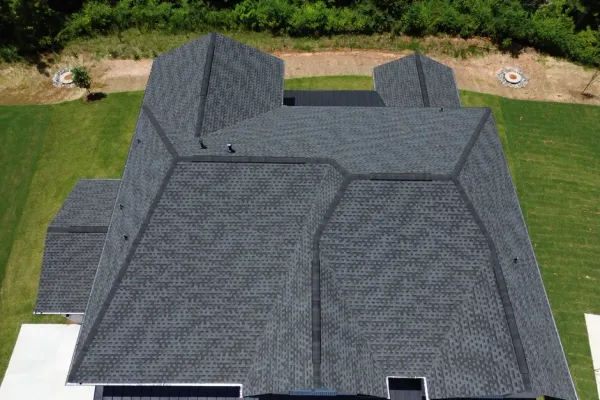
The wettest joint on a Sandy Springs roof sits around the chimney
Chimney work through this site is handled by our own North Atlanta Roofing team. Best Sandy Springs Roofer is a local roofing company serving Sandy Springs, and we take on every kind of work a chimney demands: step flashing, counter-flashing, crickets, crowns, caps, chase covers, and masonry repointing.
That range matters more on a chimney than anywhere else on the roof. A crew that only knows shingles will caulk over failed counter-flashing and call it repaired. A mason who never walks roofs will repoint the stack and miss the valley of debris damming water behind it. Sandy Springs chimneys, most of them original to homes now 40 to 60 years old, need someone reading the whole system.
Flashing rebuilt into the mortar, never smeared over it
Proper chimney flashing is a two-part metal system. Step flashing weaves into each shingle course, and counter-flashing embeds into a cut mortar joint to shed water over the top of it. When we repair a Sandy Springs chimney, the old sealant-only patch jobs come off, the reglet gets cut clean, and new metal goes in the way manufacturers spec it. Wide chimneys get a cricket behind them so water splits around the stack instead of pooling against it.
Repointing matched to sixty-year-old brick
Mortar on a 1960s chimney is softer than modern mixes on purpose, and repointing it with the wrong blend makes the brick itself spall. Our masonry work matches both the strength and the color of the original joints, then tools them to the same profile. The repair holds, and from the curb you cannot tell where old work ends and new work begins.
Step flashing fails long before the brick does
The metal where your roof meets the chimney lives a hard life. It bakes through Georgia summers, floats on thermal movement between two structures that expand at different rates, and catches every leaf the hardwood canopy drops. Eventually a corner lifts, a nail backs out, or the old sealant lets go, and water starts tracking down the face of the brick into the attic. From the ground everything looks fine. Inside, a slow stain spreads across the ceiling near the fireplace. Flashing repair is the most common chimney repair we perform in Sandy Springs, and done correctly, with step flashing under the shingles and counter-flashing set into the mortar, it outlasts the shingle field around it.
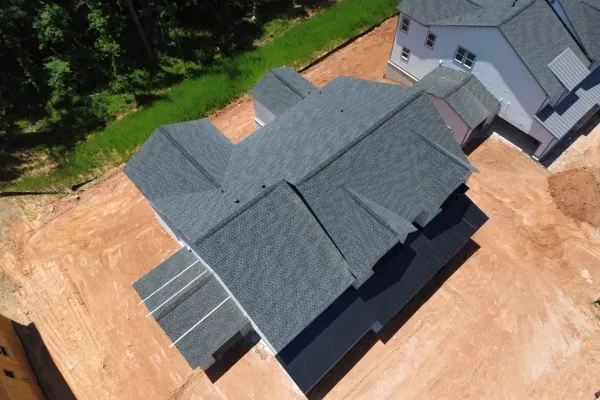
Crowns, caps, and chase covers take the weather first
The top of the stack is its own repair category. On a masonry chimney, the crown is the sloped concrete shoulder that sheds rain away from the flue, and once hairline cracks open, freeze-thaw cycles pry them wider every winter. A proper repair rebuilds or resurfaces the crown with a flexible compound instead of painting sealer over the cracks. The cap above it keeps rain, squirrels, and nesting birds out of the flue. Framed chimney chases, common on 1970s and 80s builds in Sandy Springs, carry a metal chase cover instead, and those rust from the fastener holes outward until standing water finds a pinhole. We fabricate and install replacements that pitch water off correctly.
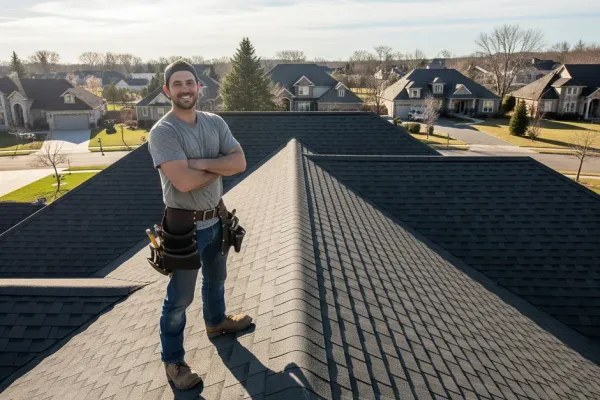
Soft mortar joints let Georgia rain straight into the stack
Brick is nearly waterproof. Mortar is not, and after 50 years of Sandy Springs humidity, driving rain, and winter freeze-thaw, the joints on many chimneys here have eroded a half inch deep or more. Water wicks through, saturates the masonry, and shows up as damp patches, white efflorescence stains, or spalled brick faces popping off in sheets. Repointing, cutting the failed mortar back to sound material and packing new mortar in lifts, stops the absorption before the structure needs rebuilding. Shaded stacks on steep wooded lots stay damp longest after rain and erode fastest, which is why the canopy side of a chimney usually goes first.
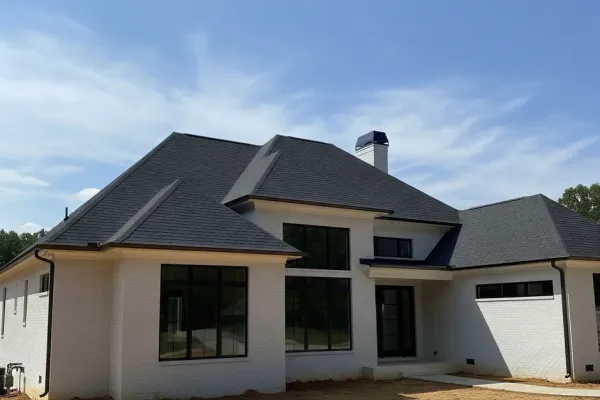
A chimney leak rarely shows up where it starts
Water that enters at the crown can exit at the mantel. Water that enters at the flashing can run a rafter ten feet and stain a hallway ceiling. Chimney leak diagnosis on a Sandy Springs roof is disciplined work: our crew inspects the attic framing around the chase, checks the decking and underlayment uphill of the stack, then works the exterior from cap to flashing line, water-testing sections when the source will not show itself. You get photos of what they find and a written scope that fixes the entry point, not the symptom. That discipline is the difference between one repair and three.
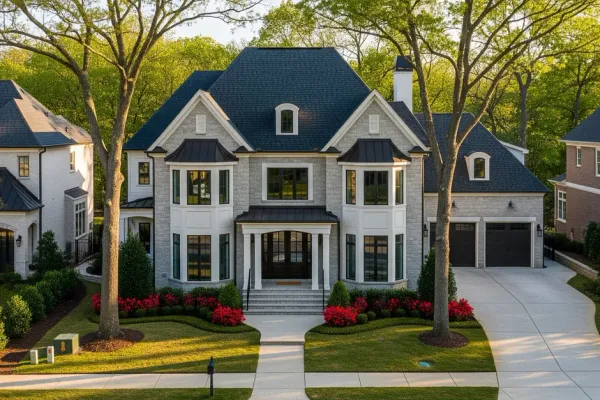
Every established Sandy Springs neighborhood has them: brick stacks rising past ridgelines on homes built when Fulton County was still filling in. The chimney is often the oldest unrestored part of the house. Roofs get replaced every 20 to 30 years, siding gets refreshed, but the chimney soldiers on with its original crown, its original mortar, and whatever flashing the last roofer left behind. Sooner or later it becomes the leak nobody can find.
What chimney repair costs in Sandy Springs
Chimney repair through this site starts at $300, which covers the common single-item fixes: resealing or replacing a run of flashing, setting a new cap, sealing a crown that has just begun to check. Larger scopes, full flashing rebuilds with a cricket, chase cover fabrication, repointing a weathered stack, get priced individually because no two chimneys carry the same damage. Current numbers for every service stay posted on the prices page, and each estimate arrives written and itemized after a free inspection. Insurance sometimes participates too. When storm wind drops a limb across a stack or peels flashing off a roof, that is generally storm damage, and the crew documents it the way an adjuster needs to see it.
Brick stacks from the 1960s through the 80s age on a schedule
Sandy Springs housing stock does the aging for you. Ranches near the City Springs district and split-levels off Roswell Rd went up in the 1960s with lime-rich mortar that is now past its design life. Contemporaries along the Riverside Dr corridor near the Chattahoochee sit under heavy hardwood canopy, where shade keeps masonry damp for days after rain and moss gets a foothold in the joints. North Springs cul-de-sacs hold two-story traditionals whose framed chases and original chase covers date to the 80s. Different construction, same result: chimneys reaching the age where flashing, crowns, and mortar all come due at once. The steep wooded lots common on the west side add one more wrinkle, because staging a chimney repair safely on sloped ground takes planning that drive-by quotes never account for.
One crew for the stack and the shingles around it
Chimney repair rarely travels alone. Flashing that failed at the stack has usually been leaking into the surrounding decking, so pairing the work with targeted roof repair closes out the whole corner of the roof in one visit. An active drip inside the house calls for roof leak repair first, tracing where the water actually enters before anyone blames the chimney by default. When a storm limb cracks a crown or punches through beside the stack, the emergency roof repair crew tarps and dries in the damage day or night, then folds the chimney work into the permanent fix. And if the inspection turns up a roof at the end of its life around a chimney worth saving, you can run the numbers on a full replacement from your phone before you ever talk scope. Wherever the repair starts, it ends the same way: photos of the finished work, a written warranty, and a chimney ready for the next storm season.
Get eyes on the chimney before the next storm finds the gap
A chimney problem caught at the flashing stage costs a few hundred dollars. The same problem found after two years of hidden saturation means masonry restoration and interior repairs. The free inspection takes under an hour, comes back with photos and a written scope, and repairs start at $300. No pressure, no invented damage.
Not sure what a new roof runs? Estimate your roof cost in Sandy Springs, measured from satellite imagery, or run a storm & insurance damage check.