Emergency Roof Repair in Sandy Springs, GA, Any Hour It Happens
Roof emergencies in Sandy Springs keep storm hours, not business hours. An oak limb comes through the decking at midnight. A June downpour finds the valley a squirrel opened up in March. Wind peels a course of shingles off the ridge while you watch from the driveway. The response is the same around the clock: a crew that answers, tarps and dries in the damage, photographs everything for your insurer, and comes back to make the permanent repair. One call at (470) 777-7344 starts all of it.
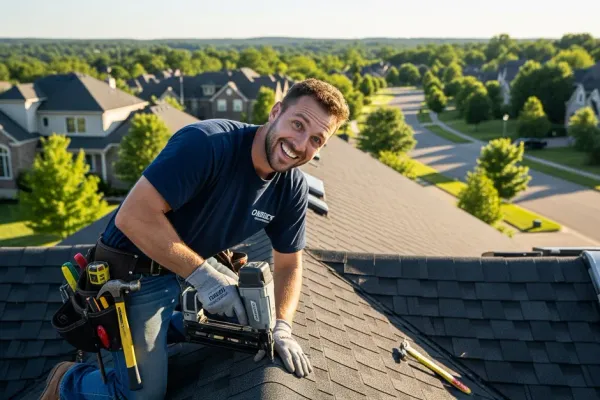
Storm damage moves faster than business hours in Sandy Springs
Emergency response through Best Sandy Springs Roofer is handled by our own North Atlanta Roofing team. We run 24/7 emergency coverage for Sandy Springs because the weather here demands it: spring hail, summer thunderstorm lines that build over the metro on hot afternoons, and the mature hardwood canopy that turns every serious wind event into a limb-fall event.
Speed matters in those first hours, but sequence matters more. Stabilize first. Document everything. Repair once, correctly, when the weather allows. That order protects your house and your insurance claim at the same time, and it is the order every emergency call follows, whether the damage is one lifted flashing or a poplar across the ridge.
Tarping and dry-in before anything else gets discussed
The first job is stopping water, full stop. Crews arrive with heavy tarps, cap nails, furring strips, and self-adhering underlayment, and they secure the breach before any conversation about permanent repairs begins. A tarp set correctly, anchored to sound decking and lapped so wind cannot get under it, holds through the next storm. A tarp thrown on wrong becomes its own emergency by morning.
Insurance documentation built the way adjusters need it
Every emergency visit produces a photo record: the damage from the roof, the water path inside, the tree or hail signature that caused it, all timestamped before and after stabilization. We prepare a line-item scope, meet your adjuster on site when the claim gets inspected, and flag hidden damage like cracked decking that first-pass reviews miss. Storm claims in Sandy Springs are usually covered, and documentation is what separates paid claims from disputed ones.
Hardwood limbs are the signature Sandy Springs emergency
The tree cover that makes Sandy Springs neighborhoods worth living in is the same canopy that fills the emergency schedule every storm season. Water oaks and poplars self-prune in high wind, and on the steep wooded lots along the Riverside Dr corridor near the Chattahoochee, there is almost always a limb with a clear shot at a roof. Impact damage runs deeper than the visible hole. The strike cracks decking beyond the puncture, shears fasteners across the surrounding courses, and bruises shingle mats that will shed granules and fail months later. Emergency crews stabilize the opening first, then map the full impact zone so the permanent repair covers everything the limb actually touched.
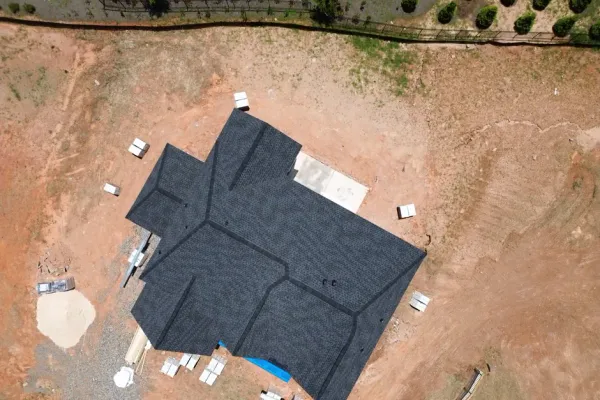
A tarp set right buys weeks, and a dry-in buys more
Not every emergency ends with a tarp. When the opening is contained and the decking around it is sound, crews often go straight to a temporary dry-in: self-adhering membrane sealed over the breach, laced into the surrounding shingles so the roof sheds water normally until permanent materials arrive. That distinction matters in a Sandy Springs summer, when the next thunderstorm is never more than a few afternoons away and a matched shingle order can take days. Tarps get anchored with furring strips into rafters, never surface-taped, and both measures come with an honest read on how long they can be trusted before the real repair has to happen.
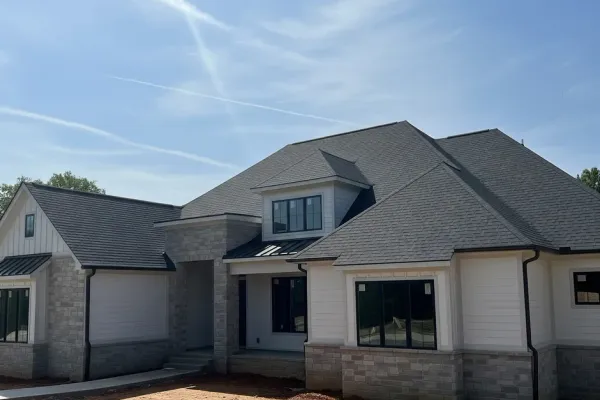
The insurance clock starts with the first photograph
Insurance policies require homeowners to prevent further damage after a storm, which means emergency stabilization is part of the claim itself, and carriers expect to see it documented. We photograph the damage before the tarp goes on, keep receipts and scope notes for the temporary work, and build the file an adjuster reads first: date-stamped images, measurements, and a repair scope that ties every line to visible damage. Homeowners who call the roofer before the carrier lose nothing. The stabilization is documented for reimbursement, and the claim conversation starts with evidence instead of memory.
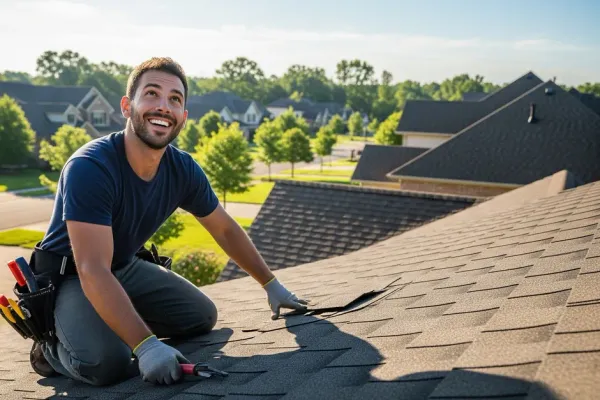
From the midnight call to the finished, matched repair
An emergency is not resolved when the tarp stops the drip. It is resolved when the roof is whole again: decking replaced where the limb cracked it, underlayment and ice-and-water shield relaid, shingles matched to the existing field, flashing and ridge caps reset, and gutters cleared of the debris the storm packed into them. We schedule that permanent phase as soon as weather and materials allow, and where damage crosses into a chimney, a valley, or a skylight, the scope covers the whole assembly rather than patching the middle of it. The workmanship guarantee applies to the finished repair, and the file closes with after photos alongside the ones from the night it happened.
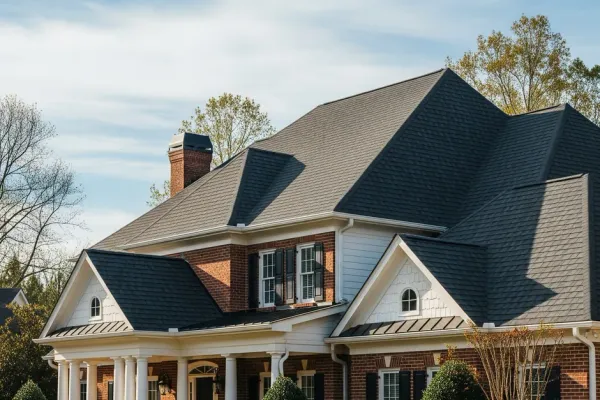
Sandy Springs sits directly in the path of the metro’s summer storm engine. Heat builds over Atlanta through the afternoon, thunderheads stack up and ride north across I-285 and GA-400, and by evening the rain is coming down sideways somewhere in Fulton County. Most roofs shrug it off. The ones that do not become emergencies, and how the first few hours get handled decides whether the story ends with a repair invoice or a gutted ceiling.
Minutes matter less than doing the first things right
Emergency roofing has a reputation for panic, and panic is exactly what a good response removes. The crew that answers a Sandy Springs call works a fixed sequence: make the scene safe, stop the water with tarping or a temporary dry-in, photograph everything, then get out of the way until permanent materials and dry weather line up. Homeowners who ride out that sequence keep their insurance claims intact and their decking dry. The alternative, hiring whoever knocks first with a ladder and a caulk gun, tends to convert one emergency into several. Storm-chasing crews sweep through North Atlanta after every major hail event, and the tarp jobs they leave behind fail in the next rain, after the truck has moved on to the next county.
The damage you cannot see is the expensive part
A hole in the roof announces itself. Saturated insulation does not. Water that enters through storm damage spreads laterally along rafters and settles into places that stay wet for weeks: attic insulation, the top plates of walls, the back of ceiling drywall. Left alone, that moisture grows into rot and mold problems that cost multiples of the roof repair. This is why every emergency response includes an attic inspection with moisture readings where the water traveled, and why the permanent repair scope covers drying and damaged material, not just shingles. It is also why a same-week roof leak repair visit makes sense after any storm that left water inside, even when the roof looks intact from the driveway. If the wind worked over a chimney, flashing and crown damage get folded into the scope through the chimney repair crew rather than papered over with sealant.
After the tarp, the repair decision gets simpler
Once the roof is stable and documented, the pressure comes off and the real decision can be made in daylight. Isolated damage on a roof with years left points to targeted roof repair, which starts at $499 and is priced in a written, itemized estimate. Widespread hail bruising or wind damage across multiple slopes often means insurance is buying most of a new roof, and it helps to walk into that conversation knowing the numbers: the instant roof cost estimate measures your actual roof from satellite imagery and returns a realistic range in about a minute. Either way, the free inspection and the photo file from the emergency visit carry straight into the estimate, so nothing gets assessed twice. Storm season in Sandy Springs is not going anywhere. A roof that has been stabilized, documented, and repaired once, properly, is how you stop thinking about it.
Save the number before storm season tests the roof
The worst time to search for an emergency roofer is by phone light while the ceiling drips. Save (470) 777-7344 now. If the storm has already done its work, call or book online and a crew will tarp, dry in, and document the damage, then walk you through the permanent repair and the insurance file that pays for it.
Not sure what a new roof runs? Estimate your roof cost in Sandy Springs, measured from satellite imagery, or run a storm & insurance damage check.